





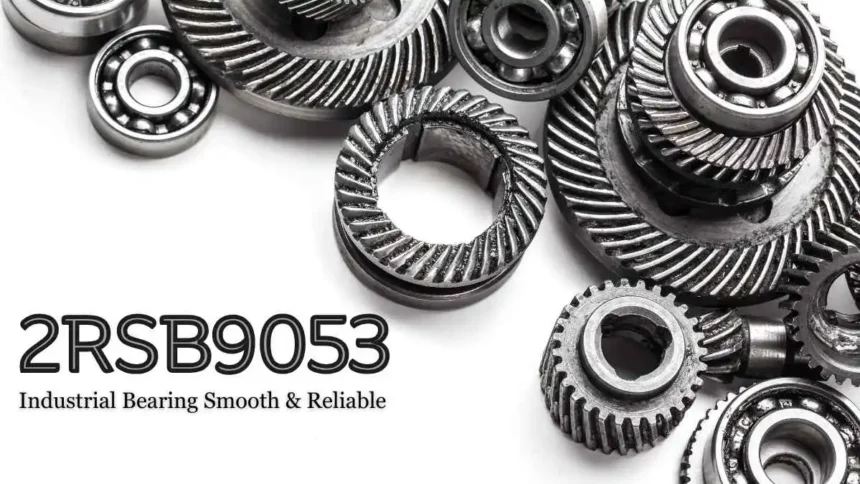
The identifier 2RSB9053 may appear cryptic at first glance, but such alphanumeric codes often play a critical role in technical, industrial, and commercial ecosystems. These codes are designed to communicate precise information in a compact form, allowing manufacturers, engineers, and buyers to identify components, systems, or specifications with accuracy. Understanding what 2RSB9053 represents can help avoid costly mistakes, improve system compatibility, and streamline procurement processes.
In many industries, a single code like 2RSB9053 can determine whether a machine operates efficiently or fails prematurely. These identifiers often encapsulate data about dimensions, tolerances, materials, and intended use cases. While the general public may overlook them, professionals rely on such codes daily to ensure consistency, safety, and performance across complex systems.
This article explores 2RSB9053 in depth, breaking down its structure, technical relevance, and practical applications. Whether you are an engineer, technician, procurement specialist, or simply curious, this guide provides a comprehensive understanding of 2RSB9053 and why it matters in modern technical environments.
Understanding the Origin of 2RSB9053
Alphanumeric codes like 2RSB9053 are rarely random. They are typically derived from internal or industry-wide naming conventions that convey layered information. The prefix, middle characters, and numerical suffix often indicate product families, functional categories, or design revisions. In the case of 2RSB9053, each segment may correspond to a specific technical attribute or manufacturing batch.
Such identifiers often originate from manufacturers seeking to standardize their product catalogs. By embedding information into the code itself, companies reduce ambiguity and improve traceability. Over time, these codes may also be adopted by distributors and service providers, expanding their relevance beyond the original manufacturer.
Understanding the origin of 2RSB9053 also helps users interpret similar codes. Once you recognize how a code is structured, it becomes easier to identify alternatives, upgrades, or compatible components. This knowledge is especially valuable in industries where documentation may be incomplete or legacy systems are still in use.
Technical Classification of 2RSB9053
From a technical perspective, 2RSB9053 is best understood as a classification identifier rather than a descriptive name. Such identifiers are commonly used for mechanical components, electronic modules, or hybrid assemblies that do not have consumer-friendly labels. The classification ensures that every unit produced adheres to a defined technical standard.
These classifications are often governed by internal documentation, engineering drawings, and quality assurance protocols. For professionals, referencing 2RSB9053 in technical manuals ensures that the correct component is specified during design, maintenance, or replacement. This minimizes the risk of mismatched parts that could compromise system integrity.
In regulated industries, classification codes like 2RSB9053 may also appear in compliance documents and certifications. This reinforces their importance, as incorrect classification can lead to regulatory violations or safety hazards. Understanding how 2RSB9053 fits into broader classification systems is therefore essential for responsible usage.
Physical and Technical Specifications
The physical and technical specifications associated with 2RSB9053 define its real-world behavior and limitations. These specifications typically include dimensions, weight, material composition, operating tolerances, and environmental resistance. Each parameter plays a role in determining where and how the component can be used.
Materials used in components identified as 2RSB9053 are often selected for durability and performance. Depending on its application, this may involve alloys, polymers, or composite materials designed to withstand stress, heat, or corrosion. These material choices directly influence lifespan and maintenance requirements.
Technical specifications also dictate performance metrics such as load capacity, electrical ratings, or rotational speed. Ignoring these metrics can lead to inefficiencies or system failure. For this reason, engineers and technicians must always cross-reference 2RSB9053 specifications with system requirements before installation or substitution.
Functional Role of 2RSB9053
At its core, 2RSB9053 serves a specific functional role within a larger system. Whether acting as a connector, stabilizer, regulator, or support component, its purpose is defined by its design and specifications. Understanding this role is crucial for effective integration and troubleshooting.
In many systems, components like 2RSB9053 do not operate in isolation. They interact with adjacent parts, transferring loads, signals, or energy. A failure or mismatch can therefore cascade, affecting overall system performance. Recognizing the functional dependencies of 2RSB9053 helps professionals anticipate and mitigate potential issues.
The functional role of 2RSB9053 also influences maintenance strategies. Components with critical roles may require more frequent inspection or redundancy planning. By appreciating how 2RSB9053 contributes to system stability and efficiency, users can make informed decisions about monitoring and replacement.
Common Applications of 2RSB9053
2RSB9053 is commonly found in industrial and technical environments where precision and reliability are essential. These may include manufacturing machinery, automation systems, or specialized equipment. Its consistent performance makes it suitable for applications that demand minimal tolerance for error.
In electronics and mechanical assemblies, components identified as 2RSB9053 often support core operational functions. They may be used in control systems, structural assemblies, or power transmission setups. Their adaptability across multiple applications highlights their versatile design.
Emerging technologies also create new use cases for components like 2RSB9053. As systems become more compact and efficient, the demand for standardized, high-performance components increases. This ensures that identifiers like 2RSB9053 remain relevant as industries evolve.
Manufacturing and Production Process
The manufacturing process behind 2RSB9053 is designed to ensure consistency and reliability across production batches. This typically involves precision machining, automated assembly, and rigorous quality control measures. Each stage of production is documented to maintain traceability.
Modern manufacturing often incorporates advanced technologies such as CNC machining, robotics, and real-time monitoring. These tools help maintain tight tolerances and reduce variability. For components like 2RSB9053, such precision is essential to ensure compatibility with other system elements.
Quality control plays a central role in production. Components are tested against predefined criteria to verify dimensions, material properties, and performance. This ensures that every unit labeled 2RSB9053 meets the same standards, regardless of production volume or location.
Conclusion
2RSB9053 represents more than just an alphanumeric code; it embodies precision, reliability, and standardization. Understanding its specifications, applications, and limitations empowers users to make informed decisions. From manufacturing and installation to maintenance and sustainability, every aspect of 2RSB9053 contributes to its value. Its role in modern systems underscores the importance of detailed technical knowledge. By approaching 2RSB9053 with care and insight, professionals can enhance performance, reduce risk, and achieve long-term success.
Frequently Asked Questions (FAQs)
What does 2RSB9053 stand for?
It is an alphanumeric identifier used to classify a specific component or specification within a technical system.
Is 2RSB9053 interchangeable with similar codes?
Interchangeability depends on specifications and compatibility guidelines provided by manufacturers.
Which industries commonly use 2RSB9053?
It is often used in industrial, mechanical, and technical environments requiring precision components.
How long does 2RSB9053 typically last?
Lifespan depends on usage conditions, maintenance practices, and environmental factors.
Where can authentic 2RSB9053 components be purchased?
From authorized manufacturers and reputable distributors with verification processes.
Are there newer versions or upgrades available?
Upgrades may exist depending on manufacturer developments and industry trends.
Read More: Aquidimatismo